1. Research ideas
CLICK BELOW to Watch Video
AI helps you find content angles, product questions, buyer pain points, comparison topics, and keyword-style ideas faster.
Instead of guessing, you can ask AI things like:

“Give me 20 blog post ideas for beginner affiliate marketers promoting email marketing tools.”
AI can return review ideas, comparison posts, tutorials, email topics, Pinterest pin ideas, and video scripts.
Helpful tools:
ChatGPT, Claude, Gemini — brainstorming, outlines, angles, prompts
Perplexity — research with sources
Google Trends — topic interest and trends
AnswerThePublic or AlsoAsked — questions people ask online
Semrush, Ahrefs, Ubersuggest — keyword and SEO research
Systeme.io – gives you everything you need to market and sell your products online. Sales funnels, autoresponder, membership site, affiliate program & more.
Example Prompt:
Give me 25 affiliate marketing content ideas for the niche [your niche]. Focus on problems, questions, comparisons, product reviews, tutorials, buying guides, and beginner-friendly topics. For each idea, include the target reader, the main problem, and the likely affiliate product angle.
2. Create content
AI can help turn one idea into a blog post, listicle, review, product comparison, social post, or video script. It can create outlines, first drafts, headlines, meta descriptions, FAQs, and calls to action.
For example, you could give AI a topic like:
“Write a beginner-friendly blog post about how Pictory helps create faceless affiliate videos.”
Then you edit the draft, add your own opinions, check product facts, and make it sound like you.

Helpful tools:
ChatGPT, Claude, Gemini — blog posts, reviews, outlines, scripts
Jasper or Copy.ai — marketing copy and brand-style content
Grammarly — grammar, clarity, tone
Canva — blog graphics, Pinterest pins, thumbnails; Canva says its AI tools can generate editable designs from text and media prompts.
Example Prompt:
Write a beginner-friendly blog post outline for the topic “[your topic].” The audience is [your audience]. Include an introduction, 6–8 H2 sections, helpful bullet points, examples, and a natural place to mention an affiliate product without sounding pushy.
3. Write emails
AWeber Free: Email marketing for free. No credit card required.AI can help create subject lines, welcome sequences, affiliate promotions, weekly newsletters, soft-sell emails, and product recommendation emails.
A good affiliate email is not just “buy this.” It explains the problem, gives value, introduces the product naturally, and includes one clear call to action.
Helpful tools:
ChatGPT, Claude, Gemini — email drafts, subject lines, CTAs
Kit — email marketing, automations, broadcasts, landing pages, and subscriber growth tools; Kit describes itself as an email marketing and newsletter platform for creators. (Kit)
Mailchimp, ActiveCampaign, AWeber, GetResponse — email campaigns and automations
Grammarly — polish and tone
Systeme.io – gives you everything you need to market and sell your products online. Sales funnels, autoresponder, membership site, affiliate program & more.
Example Prompt:
Write a 5-email affiliate promotion sequence for [product] aimed at [audience]. The tone should be friendly, helpful, and not too salesy. Include one subject line for each email, a short email body, and one clear call to action. The sequence should educate first and promote later.
4. Improve product reviews
AI can help structure a review so it is more useful and less generic.
A stronger review usually includes:
Who the product is for
Who it is not for
Key features
Real benefits
Pros and cons
Common objections
Alternatives
Final recommendation
AI can also help turn features into benefits. For example, “automatic captions” becomes “your videos are easier to watch even when viewers have the sound off.”
Helpful tools:
ChatGPT, Claude, Gemini — review structure and benefit writing
Perplexity — product research with sources
Google Search/YouTube/Reddit — real user questions and complaints
Canva — review graphics and comparison visuals
Example Prompt:
Create a detailed product review framework for [product name]. Include who it is best for, who it is not for, key features, main benefits, pros and cons, common objections, alternatives, and a final recommendation. Make the review helpful, honest, and beginner-friendly.
5. Plan traffic campaigns
AI can help plan how to get people from content to affiliate links. It can create a simple campaign that includes blog posts, email promotions, Pinterest pins, YouTube Shorts, Facebook posts, and lead magnets.
For example, one affiliate offer could become:
A product review blog post
A “how-to” blog post
A comparison post
Three emails
Five Pinterest pins
Three short videos
A checklist lead magnet
Helpful tools:
ChatGPT, Claude, Gemini — traffic campaign planning
Canva — pins, thumbnails, social graphics
Pictory — faceless videos; Pictory says it can turn text, blogs, scripts, URLs, PPTs, images, screen recordings, and existing videos into videos with captions, AI voices, avatars, templates, and different aspect ratios for platforms like YouTube, TikTok, and Instagram.
Pinterest, YouTube Shorts, TikTok, Instagram Reels — traffic platforms
Kit or Mailchimp — email traffic back to posts and offers
Example Prompt:
Create a 30-day traffic plan to promote [affiliate product] to [audience]. Include blog post ideas, Pinterest pin ideas, YouTube Shorts ideas, email topics, social media posts, and calls to action. Organize the plan by week and make it simple enough for one person to manage.
6. Repurpose content
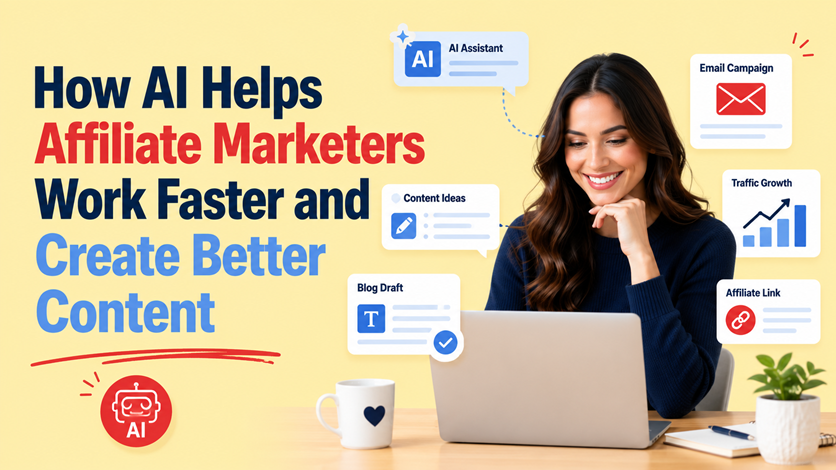
This is one of the biggest time savers.
AI can take one blog post and turn it into many smaller pieces of content.
Example:
Original content: “How to Use AI for Affiliate Marketing”
AI can turn it into:
A newsletter
A Pinterest pin title and description
A YouTube Shorts script
A Facebook post
A LinkedIn post
A product recommendation email
A checklist
A short video outline
A lead magnet idea
This keeps you from having to create everything from scratch.
Helpful tools:
ChatGPT, Claude, Gemini — repurposing text
Pictory — turning blog posts/scripts into faceless videos
Canva — turning ideas into graphics, pins, thumbnails, and social posts
Descript or CapCut — video editing and captions
Buffer, Metricool, Later — scheduling social posts
Example Prompt:
Take this blog post topic: “[blog post title]” and repurpose it into 10 smaller pieces of content. Include 2 email ideas, 2 Pinterest pin titles, 2 short-form video scripts, 2 Facebook posts, and 2 LinkedIn posts. Keep the message consistent and focused on [main benefit].
7. Stay consistent
AI helps you create a repeatable system.
Instead of wondering what to do each week, you can ask AI to build a monthly content calendar.
Example prompt:
“Create a 30-day content calendar for an affiliate marketer promoting AI video tools. Include blog posts, emails, Pinterest pins, YouTube Shorts, and soft promotional content.”
Then you batch the work:
Plan topics
Create outlines
Draft posts
Create emails
Make pins
Create short videos
Schedule everything
Helpful tools:
ChatGPT, Claude, Gemini — calendar planning
Notion, Trello, ClickUp — content organization
Kit — email scheduling and automations
Canva — design batching
Pictory — video batching
Buffer, Later, Metricool — social scheduling
Example Prompt:
Create a simple monthly content calendar for an affiliate marketer in the [your niche] niche. Include one blog post per week, one email per week, three Pinterest pins per week, and two short-form video ideas per week. Include a mix of helpful content, soft promotions, product reviews, and audience-building posts.
8. Track Results
AI can also help affiliate marketers understand what is working and what needs improvement.
Creating content is important, but tracking results is what helps you make better decisions. If you do not know which blog posts, emails, videos, or pins are getting clicks, it becomes hard to know where to spend your time.
At a basic level, you want to track things like:
Email open rates
Email click rates
Blog traffic
Pinterest clicks
YouTube Shorts views
Affiliate link clicks
Affiliate sales
Conversion rates
AI can help you organize this information and spot patterns.
For example, you can paste your weekly results into an AI tool and ask it to summarize what improved, what dropped, and what actions you should take next.
AI can also help you compare different types of content. You may discover that product comparison posts get more affiliate clicks than general tips, or that emails with curiosity-based subject lines get more opens than direct promotional subject lines.
This information helps you improve over time.
Instead of guessing, you can make decisions based on real numbers.
For example, if people open your emails but do not click, AI may suggest improving your call to action.
If your blog posts get traffic but no affiliate clicks, AI may suggest adding better product mentions, comparison tables, or clearer next steps.
If your short videos get views but no traffic, AI may recommend a stronger hook or call to action.
Helpful Tools for Tracking Results
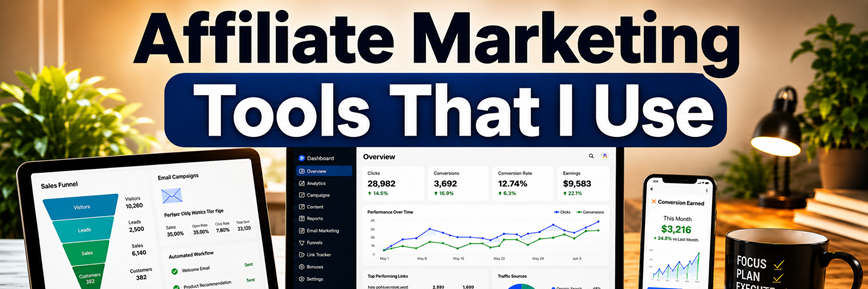
- Google Analytics – Tracks website traffic, visitor behavior, traffic sources, and conversions. Good for seeing which blog posts, pages, and campaigns send people to your affiliate links. Google describes GA4 as a way to measure web traffic and audience interaction. (Google for Developers)
- Google Search Console – Shows how your blog content performs in Google Search, including clicks, impressions, and search queries. This helps you see which keywords and posts are bringing in traffic. (Google Help)
- Bitly – Useful for shortening and tracking affiliate links. It can show link clicks, top-performing links, referral data, location, and timing trends. (Bitly)
- Pretty Links – A WordPress plugin that lets you create cleaner affiliate links and track clicks from your website.
- ThirstyAffiliates – Another WordPress affiliate link management plugin. It helps organize affiliate links, cloak long links, and track link performance.
- Kit – Good for tracking email subscribers, open rates, click rates, forms, landing pages, and email automations.
- Mailchimp, AWeber, or GetResponse – These email platforms help track email open rates, click rates, subscriber growth, unsubscribes, and campaign performance.
- Pinterest Analytics – Helpful if Pinterest is part of your traffic strategy. It shows performance, top Pins, top boards, engagement, and activity from your claimed accounts. Pinterest notes that its analytics overview gives an at-a-glance view of performance, top Pins, boards, and filters.
- YouTube Studio Analytics – Tracks video views, watch time, audience retention, click-through rates, traffic sources, and subscriber growth. Good for affiliate marketers using YouTube Shorts or product review videos.
- A Simple Spreadsheet – Sometimes the easiest tool is a spreadsheet. Track your weekly numbers: blog visits, email opens, email clicks, affiliate link clicks, Pinterest clicks, video views, and commissions.
Here is a simple AI prompt you can use:
“Review these affiliate marketing results: [paste results]. Tell me what is working, what is not working, and what I should improve next. Focus on email open rates, click rates, blog traffic, video views, affiliate clicks, and sales. Keep the advice simple and beginner-friendly.”
Tracking does not have to be complicated. Start with a few important numbers and review them weekly or monthly.
The goal is to learn what your audience responds to, improve your content, and create more of what leads to clicks, trust, and commissions.
Simple Affiliate AI Workflow
Here is how all the pieces fit together:
- Research the niche: Use AI to find problems, questions, and product angles.
- Choose an offer: Pick an affiliate product that solves a real problem.
- Create a blog post: Use AI for outline and draft, then edit with your own voice.
- Write emails: Use AI to create a short promotional email sequence.
- Create visuals: Use AI for blog images, pins, and thumbnails.
- Create videos: Use Pictory to turn the post or script into faceless videos.
- Repurpose: Turn the same idea into social posts, pins, emails, and videos.
- Track results: Watch clicks, opens, conversions, and update what is not working.
A strong all-purpose prompt:
Create a complete affiliate marketing workflow for [product] in the [niche] niche. Include research ideas, blog content, email topics, product review angles, traffic ideas, repurposing ideas, and a weekly schedule. Keep it beginner-friendly and focused on building trust before making sales.
The most important warning
AI can speed up affiliate marketing, but it should not replace honesty.
Always check product facts, avoid fake claims, disclose affiliate links, and only recommend products that make sense for your audience. AI can help you work faster, but trust is what makes affiliate marketing work long term.
What's your biggest challenge with affiliate/email marketing? Let me know in the comments, and I'll do my best to help.
Learn how to grow your email list in less than 4 hours with step-by-step, expert guidance in six short and simple lessons.
Start the course now