What Is a Featured Snippet?
What Are Highlighted Answer Boxes?
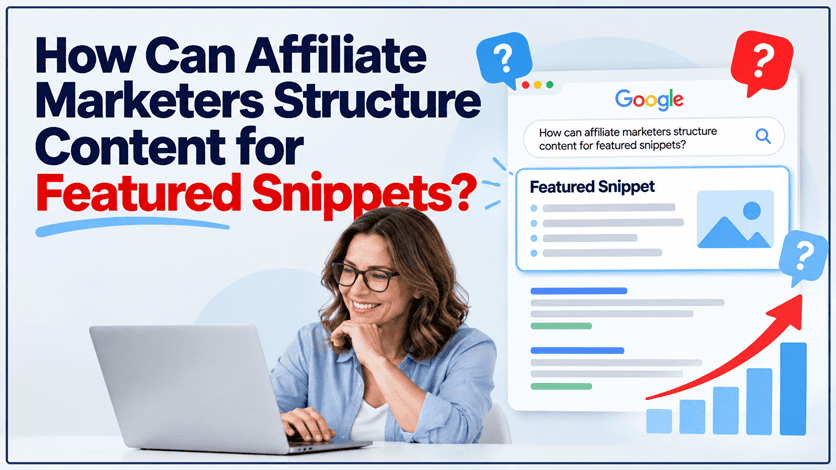
A featured snippet is a short piece of information Google selects from a webpage to answer a specific search query. It may appear as a paragraph, numbered list, bulleted list, table, or another easy-to-read format.
Featured snippets are the highlighted answer boxes that sometimes appear near the top of Google’s search results. They give searchers a quick answer without requiring them to click through several pages first.
For bloggers and affiliate marketers, earning a featured snippet can give your content valuable visibility. Your page may appear above the traditional search results, putting your answer in front of more potential readers.

Featured snippets are sometimes called position zero because they can appear above the first traditional search result.
CLICK BELOW to Watch Video
Featured Snippets Are Important
A featured snippet can make your content more noticeable in search results. Even if your page is not the first traditional result, your answer may still be displayed prominently.
This can help bloggers attract more attention, build authority, and introduce new readers to their websites.
For affiliate marketers, that visibility can eventually lead readers to useful reviews, tutorials, comparison posts, email signup forms, and product recommendations.
A Featured Snippet Includes
Most featured snippets contain a few basic elements.
These may include:
- The answer to the searcher’s question
- The webpage title
- The website or source
- A link to the original page
- Sometimes an image
- A paragraph, list, or table
The answer itself is the part you have the greatest ability to influence.
If your content is clear, well organized, and directly answers the question, Google can more easily understand the section.
Types of Featured Snippets That Google Uses
Different search questions often produce different formats.
A definition question may produce a short paragraph. A “how-to” question may produce a numbered list, while comparison searches may display a table.
Common snippet formats include:
Paragraph snippets for definitions and straightforward explanations.
Numbered lists for steps, instructions, and processes.
Bulleted lists for tips, features, ideas, or collections of information.
Tables for prices, comparisons, specifications, and other structured information.
Matching your format to the question can make your content easier to understand.
How To Write a Featured-Snippet Answer
Begin by answering the question directly.
Do not make the reader work through several paragraphs before reaching the useful information. Put the clearest answer immediately below the appropriate heading.
A short paragraph of roughly 40 to 60 words can work well for many definition-style questions, but clarity is more important than hitting an exact word count.
The answer should make sense by itself.
Avoid phrases such as “as mentioned above,” “in the section below,” or “as we discussed earlier.” Someone should be able to read the answer without needing the rest of the article for context.
Your Headings Should Be Questions
Question-based headings make it easy for readers to understand what each section covers.
Instead of using:
Featured Snippet Benefits
Try:
Why Are Featured Snippets Important?
Instead of:
Snippet Optimization
Try:
How Can You Optimize Content for Featured Snippets?
This structure also makes your article easier to scan.
Lists Can Help Your Content Get Featured
Lists are useful when someone is looking for steps, tips, ideas, or instructions.
For example, if the question is “How do you optimize a blog post for featured snippets?”, a numbered list might look like this:
- Identify the question you want to answer.
- Add the question as a heading.
- Give a direct answer immediately below it.
- Use the format that best fits the question.
- Keep the answer clear and self-contained.
- Add more detail afterward.
You can then explain each step in greater depth further down the page.
Tables Are Especially Useful When Comparing Options
Affiliate marketers can use them for product comparisons, pricing, features, plans, or specifications.
For example, a post about email marketing tools might compare:
| Tool | Best For | Free Plan | Key Feature |
|---|---|---|---|
| Tool A | Beginners | Yes | Easy setup |
| Tool B | Bloggers | Yes | Email automation |
| Tool C | Businesses | No | Advanced features |
Keeps the information accurate and easy to scan.
Do Not Copy the Featured Snippet That Already Ranks
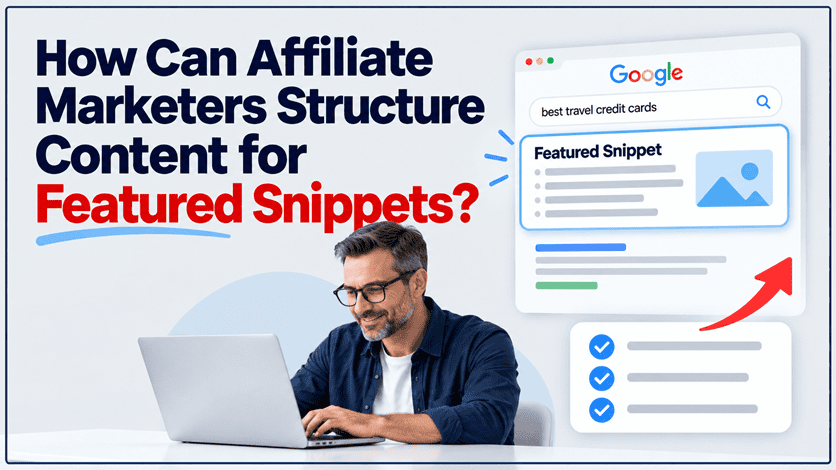
However, studying the current search results can show you what type of answer Google is displaying.
Look at:
- Whether the snippet is a paragraph, list, or table
- How directly it answers the question
- Approximately how long it is
- How the source page structures the heading
- Whether important details are missing
Then create your own original answer that is accurate, useful, and easy to understand.
Do not simply copy the existing result.
Things You Should Do and Things You Should Avoid
Do:
- Answer the question directly.
- Use clear question-based headings.
- Keep answer sections self-contained.
- Use lists for steps and tips.
- Use tables for comparisons.
- Break large paragraphs into smaller sections.
- Use helpful images when they improve the article.
- Keep information current and accurate.
Avoid:
- Long introductions before answering the question.
- Vague answers that never get to the point.
- Huge paragraphs containing several different ideas.
- Referring readers to another section before giving the answer.
- Using a paragraph when a list would be easier to understand.
- Copying another website’s snippet.
- Stuffing keywords into every sentence.
The goal is simple: make your content easy for people to understand.
How To Find Featured Snippet Opportunities
Start by searching Google for questions related to your niche.
If you are an affiliate marketer, you might search for questions such as:
- What is affiliate marketing?
- How does affiliate marketing work?
- What are the best affiliate marketing tools?
- How do bloggers make money with affiliate marketing?
- What is an affiliate link?
- How do you promote affiliate products?
Study the results and see whether Google displays a featured snippet.
Then check your existing content to see whether you already have a page that answers the same question.
Optimize These Blog Posts First
Start with articles that already receive traffic or appear relatively high in search results.
These pages may be easier to improve because Google already understands that they are relevant to the topic.
Choose three to five existing posts and review them.
Ask yourself:
- Does the article answer the main question quickly?
- Is there a question-based heading?
- Is the answer directly underneath it?
- Would a list work better?
- Would a table make the information clearer?
- Can the answer make sense on its own?
Small changes can make an existing article clearer, easier to read, and more useful to your audience.
You Should Do This Next
Choose ten questions your audience regularly asks and search for them on Google.
Look at the featured snippets that appear and notice how the answers are organized. Pay attention to paragraphs, lists, tables, headings, and the amount of information provided.
Then return to your own blog.
Improve the pages where you already have strong content, add clear question-based headings, and place direct answers underneath them.
Featured snippets are not guaranteed. But creating clear, organized, useful answers gives your content a stronger chance of being noticed while also making your articles better for the people who read them.
What's your biggest challenge with affiliate/email marketing? Let me know in the comments, and I'll do my best to help.
Learn how to grow your email list in less than 4 hours with step-by-step, expert guidance in six short and simple lessons.
Start the course now