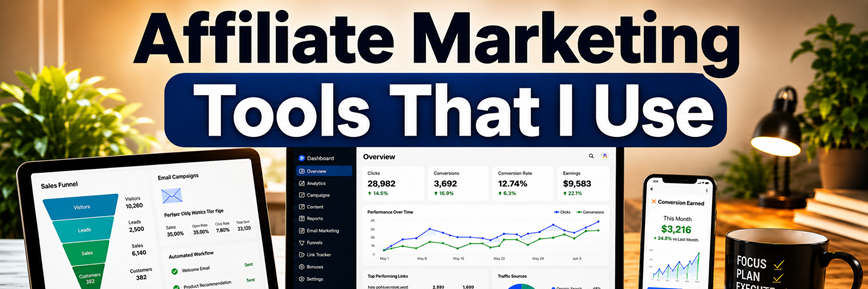
Email marketing is one of the most powerful tools a small business owner or solopreneur can use.
Click Below to Watch the Video
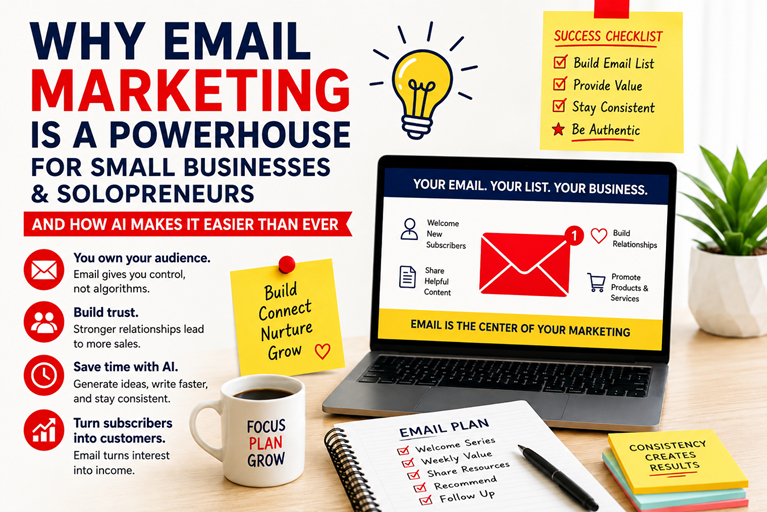
While social media gets a lot of attention, email remains one of the most reliable ways to build relationships, stay in touch with your audience, and turn interest into income. It gives you a direct line to people who have already shown interest in what you offer.

That is why email marketing continues to be a powerhouse for small businesses.
And now, with the help of artificial intelligence, creating and sending effective emails is easier than ever.
AI can help you come up with ideas, write subject lines, draft messages, organize campaigns, and stay consistent without spending hours staring at a blank screen. Used correctly, AI does not replace your voice. It helps you express your ideas faster and more clearly.
For small businesses, affiliate marketers, bloggers, coaches, consultants, and content creators, this combination of email and AI can be a major advantage.
Email Gives You Direct Access to Your Audience
One of the biggest advantages of email marketing is control.
When you build an email list, you are creating an audience that belongs to your business. You are not depending entirely on social media platforms, search engines, or changing algorithms to reach people.
Social media can be useful, but it is not fully under your control. A platform can change its rules. Your reach can suddenly drop. An algorithm update can make your posts harder to see. Your account can even be restricted or removed.
With email, you have a more direct connection.
When someone joins your list, they are giving you permission to contact them. That means they are more than a casual visitor. They have taken a step toward building a relationship with you.
This is especially important for small businesses and solopreneurs because you may not have a huge advertising budget. Email helps you stay visible without needing to pay every time you want to reach your audience.
Click Below to Watch the Video
AWeber Free: Email marketing for free. No credit card required.Email Builds Trust Over Time
Most people do not buy the first time they hear about you.
They may visit your website, watch a video, read a blog post, or click a social media link. But that does not mean they are ready to purchase immediately.
Email gives you a way to keep the conversation going.
You can send helpful tips, answer common questions, share stories, explain your products, recommend useful tools, and build confidence over time.
This is where email becomes more than just a selling tool. It becomes a relationship-building tool.
For a small business, trust is everything. People want to know who they are buying from. They want to feel comfortable. They want to believe that you understand their problem and can help them solve it.
A simple weekly email can do that.
You do not need to write long, complicated messages. In many cases, a short, useful email that helps your reader take one small step forward is enough.
Email Often Produces Better Engagement Than Social Media
Social media posts can disappear quickly.
A person may follow your page, but that does not mean they will see your next post. Their feed is crowded. Your content competes with friends, family, entertainment, news, ads, and thousands of other distractions.
Email is different.
When you send an email, it lands in a place people check regularly. Even if they do not open every message, your name can still become familiar over time.
That repeated visibility matters.
For small businesses and solopreneurs, email allows you to stay top of mind. When your audience is ready to buy, learn more, or take action, they are more likely to remember you.
This makes email especially valuable for products or services that require trust, education, or repeated exposure before someone makes a decision.
Email Helps Turn Content Into Income
Many small business owners and content creators spend a lot of time creating blog posts, videos, podcasts, social media posts, or tutorials.
That content may attract visitors, but without email, many of those visitors leave and never return.
An email list helps you capture that interest.
For example, someone may read your blog post today but not be ready to buy. If they join your list, you can continue helping them through follow-up emails.
This gives you more chances to recommend products, promote services, share affiliate links, invite readers to a webinar, introduce a course, or send people back to your latest content.
Email helps turn one-time visitors into repeat readers, subscribers, buyers, and loyal fans.
That is why email should be the center of your online marketing system.
Your blog, YouTube channel, Pinterest account, Facebook page, Instagram profile, or TikTok videos can all feed into your email list. Social media brings attention. Email builds the relationship.
Email Works for Many Types of Businesses
Another reason email marketing is so powerful is that it works across many different business models.
A blogger can use email to send new posts, recommend affiliate products, and promote digital downloads.
A coach can use email to educate prospects and invite them to book a call.
A local business can use email to announce specials, events, seasonal offers, or reminders.
An online store can use email to follow up with shoppers, recover abandoned carts, and introduce new products.
A course creator can use email to teach, build trust, and launch new training.
A solopreneur can use email to stay connected without needing to post on social media every day.
No matter what you sell, email gives you a way to communicate directly with people who have already raised their hand and shown interest.
Many People Start Email Marketing the Wrong Way
Even though email is powerful, many people get started incorrectly.
One common mistake is skipping strategy.
They collect email addresses but do not have a plan for what to send, how often to send, or what goal each message should serve.
Another mistake is waiting for perfection.
They think they need the perfect logo, perfect email design, perfect lead magnet, and perfect welcome sequence before they can begin. As a result, they never actually start.
A third mistake is treating email like social media.
Email should not feel like random broadcasting. It should feel more personal and useful. People allow you into their inbox, so your message should respect that attention.
The goal is not to send as many emails as possible. The goal is to send helpful, relevant emails that strengthen the relationship.
The Two Biggest Barriers: Time and Ideas
For many small business owners and solopreneurs, the two biggest email marketing barriers are simple.
They do not know what to say.
And they do not have enough time to say it consistently.
This is completely understandable.
When you are running a small business, you may already be handling sales, customer service, content creation, product delivery, bookkeeping, and daily operations.
Sitting down to write an email can feel like one more task on an already full list.
That is where AI can help.
AI can shorten the distance between idea and finished email. It can help you brainstorm topics, organize your thoughts, write first drafts, improve your subject lines, and repurpose existing content.
Instead of starting with a blank page, you can start with a rough draft and shape it into your own voice.
How AI Makes Email Marketing Easier
AI can support almost every step of your email marketing workflow.
It can help you come up with weekly email ideas based on your niche, audience, products, or blog posts.
It can create subject line options so you are not stuck trying to think of one good headline.
It can draft emails from a few simple notes.
It can turn a blog post into a short email.
It can summarize a video into a newsletter.
It can help you write welcome emails for new subscribers.
It can suggest calls to action, such as reading a post, watching a video, clicking an affiliate link, downloading a guide, or replying with a question.
AI can also help you create different types of emails, including educational emails, story-based emails, product recommendation emails, reminder emails, launch emails, and follow-up messages.
This saves time and makes consistency much easier.
But it is important to remember that AI should be your assistant, not your replacement.
You are still the strategist. You know your audience. You know your offer. You know your values. You bring the real-life experience, judgment, personality, and human touch.
AI helps with speed. You provide the direction.
The Best Email Strategy Is Simple
Learn how to grow your email list in less than 4 hours with step-by-step, expert guidance in six short and simple lessons.
Start the course nowA good email strategy does not have to be complicated.
Start by choosing one audience and one main topic.
Then decide what kind of value you want to provide.
You might send helpful tips, short lessons, product recommendations, personal stories, quick tutorials, case studies, or links to useful resources.
A simple weekly email is enough for many small businesses.
Each email can follow a basic structure:
Start with a problem, question, or idea your audience cares about.
Share one useful tip, story, or insight.
Connect it to your product, service, blog post, affiliate recommendation, or next step.
End with a simple call to action.
That is it.
You do not need to sound like a big company. In fact, as a solopreneur, your personal voice is one of your greatest advantages.
Solopreneurs Have a Special Advantage
Large companies often sound polished but impersonal.
Solopreneurs can sound real.
That is a major advantage.
You can write in a more conversational style. You can share personal lessons. You can respond quickly to your audience’s needs. You can focus on a specific niche and serve that audience well.
You do not need to appeal to everyone.
In fact, email works best when you know exactly who you are talking to.
A small, focused email list can be more valuable than a large, uninterested audience. If your subscribers trust you and care about your topic, your emails can lead to steady traffic, sales, affiliate commissions, and repeat business.
Final Thoughts
Email marketing is still one of the best tools available to small businesses and solopreneurs.
It gives you control, direct access, stronger relationships, and a reliable way to turn interest into income. Unlike social media, your email list is an asset you own. It allows you to stay connected with your audience even when platforms, algorithms, and trends change.
And with AI, email marketing is now easier to manage.
AI can help you find ideas, write faster, improve your subject lines, repurpose content, and stay consistent. But the heart of your email marketing still comes from you.
Your voice, your experience, your judgment, and your understanding of your audience are what make your emails valuable.
The best approach is simple: make email the center of your marketing system, use AI to save time, and focus on building real connections with the people who want to hear from you.
When you combine a helpful message, a clear strategy, and consistent communication, email can become one of the strongest income-building tools in your business.
What's your biggest challenge with affiliate/email marketing? Let me know in the comments, and I'll do my best to help.
Learn how to grow your email list in less than 4 hours with step-by-step, expert guidance in six short and simple lessons.
Start the course now