A successful blog does more than publish information. It attracts the right readers, holds their attention, answers their questions, and encourages them to take the next step.
Following proven blogging best practices can help you create stronger content, improve the reader experience, and build a blog people want to return to.
What Are Blogging Best Practices?
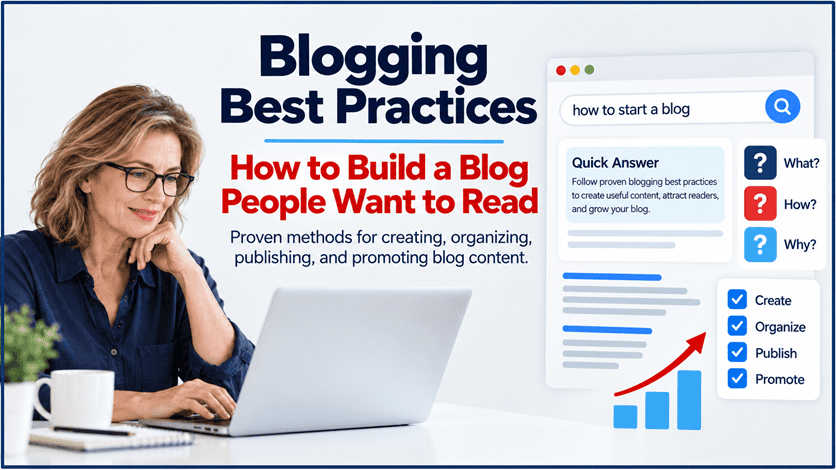
Blogging best practices are proven methods for creating, organizing, publishing, and promoting blog content so it is useful to readers, easy to understand, search-friendly, and capable of supporting your business or marketing goals.

These practices include writing useful content, using clear headings, publishing consistently, improving readability, optimizing posts for search, and giving readers a clear reason to take action.
CLICK BELOW to Watch the Video
Do Blogging Best Practices Matter?
There are millions of blog posts competing for attention.
If visitors arrive on your site and cannot quickly understand what your article is about, they may leave. On the other hand, clear and useful content gives them a reason to stay.
Good blogging practices can help you:
- Attract more visitors
- Keep readers on your site longer
- Build trust with your audience
- Improve search visibility
- Increase email subscribers
- Generate affiliate clicks
- Promote products or services
- Encourage readers to return
Your blog should make things easier for the reader, not harder.
How Can You Make Your Blog Posts Stand Out?
Create content that offers something useful or different.
You don’t always need a completely new topic. Sometimes the best opportunity is explaining a familiar subject more clearly, adding personal experience, providing better examples, or answering questions other articles overlook.
Look for ways to make your content more valuable.
You might:
- Explain exactly how something works
- Share lessons from personal experience
- Provide step-by-step instructions
- Compare several solutions
- Answer common questions
- Discuss mistakes to avoid
- Recommend useful tools and resources
Give readers a reason to choose your article instead of the dozens of others competing for their attention.
Should Blog Posts Be Short or Long?
A blog post should be as long as necessary to answer the reader’s question properly.
Some topics may only need 600 words. Others may require 1,500 words or more.
Don’t add unnecessary information simply to make an article longer.
Readers generally want clear answers. Use short paragraphs, useful headings, lists, and examples so they can quickly find what they need.
How Can You Make Blog Posts Easier to Read?
Large walls of text can make even useful information difficult to read.
Keep most paragraphs to two or three sentences. Mix short, medium, and longer sentences to create a natural rhythm.
Improve readability by using:
- Descriptive headings
- Short paragraphs
- Bullet points
- Numbered lists
- Bold text for important ideas
- Helpful images
- Tables when comparing information
- Plenty of white space
Your content should look inviting before the reader even begins reading.
Should Your Blog Sound Personal?
Yes.
One of the advantages of blogging is that you can communicate more naturally than you would on a traditional corporate website. Readers often respond well to conversational writing that feels helpful rather than overly formal.
Write as though you are explaining the subject to one person.
Your blog can have personality without becoming an advertisement. Help first, then introduce products, affiliate offers, services, or other recommendations when they naturally fit the topic.
How Often Should You Publish New Blog Posts?
Consistency is more important than publishing constantly.
Choose a realistic schedule you can maintain. That might mean publishing once a week, twice a month, or even once a month if each article is useful and well planned.
A predictable schedule also helps you stay organized.
Instead of publishing several articles at once and then disappearing for months, create a sustainable content routine.
How Should You Use Keywords in Blog Posts?
Keywords help search engines and readers understand what your article covers.
Use your primary keyword naturally in important places such as:
- The blog post title
- The introduction
- One or more subheadings
- The page URL
- The meta description
- Image descriptions when appropriate
- The body of the article
Avoid repeating keywords simply for the sake of adding them.
Older blogging advice sometimes suggested bolding or italicizing keywords to improve rankings. Today, formatting should primarily be used to make important information easier for readers to notice.
Write naturally first.
How Can Question-Based Headings Improve Your Content?
Question headings closely match the way people search for information.
For example, instead of using a heading such as:
Blog Post Length
Try:
How Long Should a Blog Post Be?
Instead of:
Blog Promotion
Try:
How Can You Promote Your Blog?
Questions immediately tell the reader what the next section will answer.
They can also make your content easier to scan and organize.
How Can Social Media Help Grow Your Blog?
Social media can introduce your content to people who may never discover it through search alone.
Share your blog posts on the platforms where your audience spends time. Depending on your niche, that might include Pinterest, Facebook, LinkedIn, YouTube, Instagram, or other communities.
Don’t simply post links repeatedly.
Create helpful social content that leads people back to your article because they want more information.
How Can Search Traffic Help Your Blog Grow?
Search traffic can provide a steady stream of visitors long after an article is published.
To improve your chances of attracting search traffic, focus on creating high-quality posts that answer specific questions.
You should also:
- Research the questions your audience asks
- Use descriptive titles
- Organize content with clear headings
- Add internal links to related articles
- Update older posts when necessary
- Write useful meta descriptions
- Make your site easy to navigate
The goal is not simply to attract clicks.
You want the right people to find the right content.
How Should You Handle Blog Comments?
Comments can give you valuable insight into what your audience thinks.
Readers may ask questions, point out something you missed, or suggest topics for future articles. Constructive criticism can also help you improve.
Not every comment will be positive.
Respond professionally when possible and focus on feedback that can help you create better content.
What Should Your Blog Homepage Include?
Your homepage should do more than display a long list of recent posts.
It should quickly help new visitors understand what your site is about and where they should go next.
Consider including:
- A short description of your blog
- Featured articles
- Popular categories
- A search box
- An email signup form
- Recommended resources
- Your latest posts
- A clear call to action
A good homepage acts like a guide.
It helps visitors move deeper into your website.
Why Does Font Size and Design Matter?
Great content won’t help much if people struggle to read it.
Choose fonts that are clean and easy to read on desktop computers, tablets, and phones. Avoid text that is too small, decorative, or crowded.
Keep your overall blog design simple.
Readers should notice your content first.

What Should Your Call to Action Ask Readers to Do?
Every blog post should have a purpose.
After readers finish the article, decide what you want them to do next.
Your call to action might encourage them to:
- Read another article
- Join your email list
- Download a free guide
- Watch a video
- Leave a comment
- Share the article
- Try a recommended tool
- Visit an affiliate offer
- Purchase a product
Don’t overwhelm readers with several competing choices.
A clear next step usually works better.
Can Blogging Become a Business?
Yes. A blog can start as a hobby and gradually develop into an income-producing business.
Bloggers can earn money through affiliate marketing, digital products, advertising, sponsored content, memberships, consulting, services, and other opportunities.
However, income rarely comes from publishing random articles.
What Are the Most Important Blogging Best Practices to Remember?
You don’t need a complicated system to improve your blog.
Start with the fundamentals:
- Write for a specific audience.
- Answer real questions.
- Create useful and original content.
- Use clear, descriptive headings.
- Keep paragraphs short.
- Make your content easy to scan.
- Publish consistently.
- Optimize naturally for search.
- Promote your articles.
- Give readers a clear next step.
These practices work together.
A useful article attracts attention. Clear formatting keeps people reading. Consistent publishing builds trust, and a strong call to action turns that attention into results.
How Can You Start Improving Your Blog Today?
Choose five of your most important existing blog posts and review them.
Ask yourself whether each article answers the main question quickly, uses clear headings, contains short paragraphs, and gives readers a logical next step.
Then improve one thing at a time.
You don’t have to rebuild your entire blog overnight. Small improvements across your best content can make your site easier to read, easier to find, and much more useful to your audience.
What's your biggest challenge with affiliate/email marketing? Let me know in the comments, and I'll do my best to help.
Learn how to grow your email list in less than 4 hours with step-by-step, expert guidance in six short and simple lessons.
Start the course now