How Affiliate Marketing Works in the AI Age
Affiliate marketing is still one of the easiest online business models to understand.
CLICK BELOW to Watch Video
Click Here – Discover 10 Unexpected Ways To Earn Online

You recommend a product. Someone buys through your link. You earn a commission.
That simple idea has not changed. But almost everything around it has.
Today, affiliate marketers have more tools, more platforms, and more ways to reach people than ever before. Blogs, YouTube, Pinterest, email marketing, social media, podcasts, short videos, niche websites, and artificial intelligence have all changed how affiliate marketing works.
In the past, some people thought affiliate marketing meant placing links on a website and waiting for commissions. That is not enough anymore.
Modern affiliate marketing works best when you help people first.
You answer questions. You solve problems. You explain choices. You recommend products that make sense for your audience. When people trust your opinion, they are much more likely to click your links and buy from your recommendations.
That is why affiliate marketing today is not just about traffic. It is about trust.
What Affiliate Marketing Really Means
Affiliate marketing is a performance-based business model. A company pays you when your promotion helps create a result, usually a sale, lead, trial, or sign-up.
You do not have to create the product.
You do not have to ship anything.
You do not have to handle customer service in most cases.

Your job is to connect the right person with the right product.
You should also avoid depending on one affiliate program.
For example, a blogger may recommend an email marketing tool. A YouTuber may review video software. A Pinterest creator may share templates, planners, courses, or digital tools. If someone clicks the affiliate link and buys, the affiliate earns a commission.
This makes affiliate marketing attractive to beginners because the startup cost can be low. You can begin with content, a simple website, a social platform, or an email list.
But simple does not always mean easy.
To succeed, you need a clear niche, a helpful message, and products that match what your audience actually needs.
Why Affiliate Marketing Has Changed
Technology has made affiliate marketing more powerful.
Artificial intelligence can help you brainstorm topics, write outlines, create email drafts, repurpose content, generate video scripts, and improve headlines. Analytics tools can show where your traffic comes from, which links people click, and which products produce income.
Affiliate platforms have also become easier to use. Networks such as Amazon Associates, ShareASale, CJ Affiliate, ClickBank, Impact, and others make it possible to find products, create links, track clicks, and monitor commissions from one dashboard.
This gives beginners a much easier starting point than marketers had years ago.
But there is also more competition.
People are surrounded by reviews, ads, social posts, videos, and recommendations every day. Because of that, your content must do more than say, “Buy this.”
It needs to explain why a product matters.
It needs to show who it is for.
It needs to be honest about the pros and cons.
It needs to help the reader make a better decision.
That is where good affiliate marketers stand out.
Best Practices for Affiliate Marketing Success
The first step is choosing the right products.
Do not promote something just because it pays a high commission. Promote products that fit your niche, match your audience, and solve a real problem. A strong match builds credibility. A poor match can damage trust quickly.
Next, create helpful content.
Content is the engine of affiliate marketing. Blog posts, tutorials, comparison articles, product reviews, YouTube videos, email newsletters, checklists, and social media posts can all guide people toward a buying decision.
The goal is not to pressure people. The goal is to help them understand their options.
Transparency is also important.
Always disclose when you may earn a commission from a recommendation. This is not only the right thing to do, but it is also required in many situations. A simple disclosure helps protect your reputation and lets your audience know you are being honest.
Programs can change. Commission rates can drop. Products can disappear. Accounts can be closed. When you promote more than one quality product, you create a safer and more stable income stream.
Finally, pay attention to your numbers.
Track your clicks, conversions, traffic sources, and best-performing content. If one blog post is getting clicks but no sales, it may need a stronger call to action. If one product converts well, you may want to create more content around that topic.
Data helps you improve.

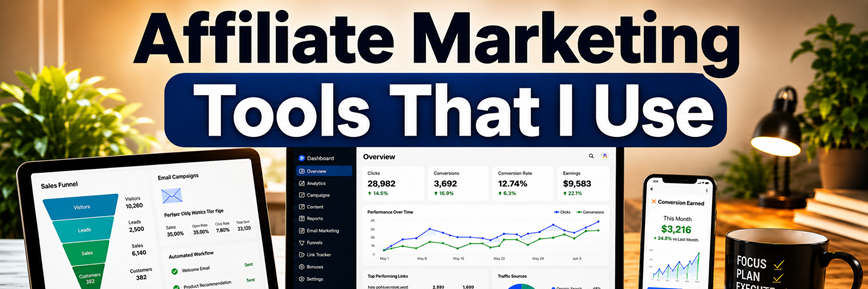
Useful Tools for Affiliate Marketers
Affiliate marketers do not need dozens of complicated tools. But a few good ones can make the work much easier.
An affiliate network helps you find products and track commissions. Amazon Associates, CJ Affiliate, ShareASale, ClickBank, and similar platforms are common starting points.
A website platform such as Systeme.io gives you a home base for your content. Your blog can attract search traffic, build authority, and give your affiliate links a permanent place to live.
An email marketing tool is also valuable – Systeme.io does this also. Email lets you follow up with people after they leave your website or social media page. You can share tips, recommend products, send new content, and build trust over time.
Analytics tools help you understand what is working. Google Analytics, link tracking tools, and platform dashboards can show which content produces the best results.
AI tools can help with planning and content creation. They can suggest article ideas, write first drafts, create outlines, improve subject lines, and turn one piece of content into several smaller pieces.
Still, AI should not replace your judgment.
Your experience, opinion, and understanding of your audience are what make your recommendations valuable.
Ethics Matter in Affiliate Marketing
Trust is one of your most important assets.
If your audience believes you are only trying to make a commission, they may stop listening. But if they believe you are trying to help them make a smart decision, they are more likely to return, subscribe, and buy.
Be honest about what a product can and cannot do. Do not exaggerate results. Do not promise income, success, weight loss, business growth, or any other result unless you can support the claim.
Respect your audience’s privacy. If you collect email addresses, make it clear what people are signing up for. Give them a simple way to unsubscribe.
Focus on quality over quantity.
It is better to recommend a few excellent products than to promote every offer you can find. Too many promotions can make your content feel scattered and untrustworthy.
Good affiliate marketing feels helpful. Bad affiliate marketing feels pushy.

The Future of Affiliate Marketing
Affiliate marketing will continue to grow, but it will also continue to change.
AI will make content creation faster. Video will keep expanding. Email will remain important because it gives creators a direct connection with their audience. Influencers, bloggers, niche experts, and small creators will continue using affiliate partnerships to earn income from their knowledge and recommendations.
At the same time, audiences will become more selective.
They will want honest reviews, clear comparisons, real examples, and practical advice. They will trust people who explain products clearly and admit when something is not the right fit.
That creates a big opportunity for thoughtful affiliate marketers.
You do not need to be the loudest voice online. You need to be useful. You need to be consistent. You need to recommend products that genuinely help your audience.
Affiliate marketing is no longer just about links and commissions.
It is about relationships. It is about trust. It is about helping people find solutions while building an income stream that can grow over time.
For beginners, small business owners, bloggers, content creators, and solopreneurs, affiliate marketing remains one of the most flexible ways to earn online.
The tools are better. The opportunities are bigger. And with the right approach, affiliate marketing can still be a smart path into the digital economy.
What's your biggest challenge with affiliate/email marketing? Let me know in the comments, and I'll do my best to help.
Learn how to grow your email list in less than 4 hours with step-by-step, expert guidance in six short and simple lessons.
Start the course now