An automated email sequence is one of the most useful tools you can build for your online business.
Click Below to Watch the Video
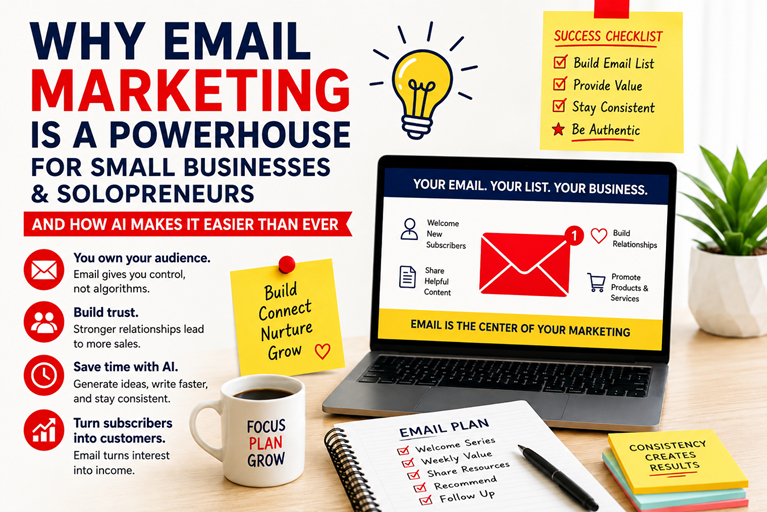
Instead of writing a new email every time someone joins your list, you write a short series of emails once. Then your email platform sends those messages automatically whenever a new subscriber signs up.

This gives every new person the same strong first impression. It also helps you build trust, deliver value, introduce your story, and guide subscribers toward your offer without having to manually follow up every time.
For small business owners, bloggers, affiliate marketers, coaches, course creators, and solopreneurs, this can be a powerful system. It saves time, improves consistency, and helps turn new subscribers into warm leads and buyers.
And with AI, creating the sequence is much easier than it used to be.
AI can help you draft the emails, create subject lines, organize your message, improve your calls to action, and keep your tone consistent. You still provide the strategy and personal touch, but AI can help you get the work done faster.
What Is an Automated Welcome Sequence?
A welcome sequence is a series of emails automatically sent to someone after they join your email list.
Usually, this happens after they sign up for a lead magnet, such as a checklist, guide, template, mini-course, or free download.
The purpose of a welcome sequence is simple:
Introduce yourself
Deliver what you promised
Build trust
Teach something useful
Show why your advice matters
Guide the reader toward the next step
That next step may be reading a blog post, watching a video, replying to your email, joining a community, booking a call, buying a product, or clicking an affiliate link.
The key is that the sequence should feel helpful, not pushy.
Why Automated Sequences Work So Well
Automated email sequences work because they reach people at the right time.
When someone first joins your list, their interest is usually high. They just requested your free resource. They are paying attention. That is the perfect time to introduce yourself and begin building a relationship.
Another reason sequences work is consistency.
Without automation, many subscribers sign up and never hear from the business again. That is a missed opportunity.
With a welcome sequence, every subscriber gets a planned experience. You are not depending on memory, mood, or available time. Your system is already in place.
Automation also allows you to build trust before making an offer. Instead of asking for a sale immediately, you can warm up the relationship with useful content, stories, examples, and proof.
The Goal Is to Nurture Before You Sell
Many people make the mistake of trying to sell too quickly.
A new subscriber may not know you yet. They may not understand your approach. They may not be ready to trust your recommendation.
That is why nurturing matters.
Nurturing means helping the reader feel seen, understood, and supported before you make a stronger offer.
You can do this by sharing helpful tips, answering common questions, telling your story, explaining mistakes to avoid, and showing how others have solved similar problems.
A good email sequence does not just ask people to buy. It prepares them to understand why your offer makes sense.
Use a Simple Five-Email Welcome Sequence
A strong beginner-friendly sequence can include five emails.
Each email has one purpose.
Email 1: Welcome and Delivery
The first email should go out immediately after someone signs up.
Your goal is to make a great first impression.
In this email, deliver the lead magnet you promised. Thank the subscriber for joining. Tell them what they will receive from you going forward.
Keep the tone warm, simple, and personal.
Do not sound like a corporation. Write like a helpful person welcoming someone into your world.
You can also invite them to reply with a quick answer to a simple question. This can improve engagement and help you learn more about your audience.
Email 2: Your Story and Credibility
The second email should help the reader understand who you are and why you do what you do.
This does not need to be a long life story. Focus on the part of your story that connects to your audience’s problem.
For example, you might share what you struggled with, what you learned, or why you created your business.
Stories build connection because people relate to real experience.
This email should position you as a guide, not a showoff. The goal is to make the reader think, “This person understands where I am.”
Email 3: Value and Education
The third email should teach something useful.
Answer a question your audience is already asking. Give them a quick win. Show them a better way to think about their problem.
This email is not mainly about selling. It is about proving that your emails are worth reading.
Examples could include:
A mistake to avoid
A simple checklist
A short how-to lesson
A helpful framework
A beginner-friendly tip
A quick case example
When you provide useful value, subscribers become more likely to trust your future recommendations.
Email 4: Proof and Confidence
The fourth email should build confidence.
This is where you can share social proof, examples, results, testimonials, case studies, or before-and-after stories.
If you do not have testimonials yet, you can still use proof in other ways.
You can share a personal example, a lesson learned, a common pattern you have noticed, or a simple explanation of why your method works.
The goal is to show that the idea you are teaching is practical and believable.
People are more likely to take action when they see that others have benefited or that the process makes sense.
AWeber Free: Email marketing for free. No credit card required.Email 5: The Offer
The fifth email is where you make a clear offer.
By now, you have welcomed the subscriber, shared your story, provided value, and built confidence.
Now it is appropriate to invite them to take the next step.
Your offer could be your own product, a service, a paid course, a consultation, a membership, or an affiliate product you genuinely recommend.
Do not be timid. Be clear.
Remind the reader of the problem they want solved. Explain how the offer helps. Then include one strong call to action.
For example:
“Click here to see the full training.”
“Download the toolkit here.”
“Check out my recommended tool.”
“Book your starter call here.”
Keep it simple. One email should have one main call to action.
Follow Four Rules for Every Email
No matter which email you are writing, follow these four rules.
Keep One Clear Purpose
Do not try to do too much in one message.
Each email should have one main goal.
Write a Strong Subject Line
The subject line gets the email opened. Make it clear, specific, and interesting.
Use One Call to Action
Too many links or choices can confuse readers. Give them one clear next step.
Keep Your Voice Consistent
Your emails should sound like you. Whether your tone is friendly, practical, encouraging, direct, or conversational, keep it consistent throughout the sequence.
Use AI to Write Your Sequence Faster
AI can help you draft your automated sequence much faster.
The best way to use AI is to give it clear direction.
Use this prompt framework:
“Act as an email marketing copywriter. Write email [number] in a five-part welcome sequence for [audience]. The goal of this email is to [goal]. Use a [tone] tone. Keep it under [word count] words. Include one clear call to action: [CTA].”
Example:
“Act as an email marketing copywriter. Write email 3 in a five-part welcome sequence for beginner affiliate marketers. The goal of this email is to teach one useful tip about choosing better affiliate products. Use a friendly, beginner-friendly tone. Keep it under 350 words. Include one clear call to action to read my full blog post.”
After AI drafts the email, edit it.
Add your own examples. Remove generic phrases. Make sure the email sounds natural and personal.
AI should help you write faster, but you are still the strategist.
Set Up the Automation
Once your emails are drafted, load them into your email platform.
The trigger should usually be a new subscriber joining your list or requesting a specific lead magnet.
A simple schedule might look like this:
Email 1: Immediately
Email 2: One day later
Email 3: Two days later
Email 4: Two days later
Email 5: Two days later
This spacing keeps you visible without overwhelming the reader.
You can also use tags or segments based on behavior. For example, if someone clicks a link about a certain topic, you can tag them as interested in that subject.
Over time, this helps you send more relevant emails.
Test and Improve Over Time
Your first sequence does not have to be perfect.
Once it is live, watch your results.
Pay attention to open rates, click rates, replies, unsubscribes, and sales.
If people are not opening, test new subject lines.
If they open but do not click, improve your email body or call to action.
If they unsubscribe quickly, your sequence may need better expectations, better targeting, or a softer approach.
Automation does not mean “set it and forget it forever.” It means you build a system that can improve over time.
Final Thoughts
An automated email sequence helps you welcome new subscribers, build trust, deliver value, and guide people toward a sale.
The best part is that you only have to build it once. After that, it can run in the background every time someone joins your list.
Start with a simple five-email sequence: welcome, story, value, proof, and offer.
Use AI to speed up the drafting process, but make sure your own voice and strategy guide the final version.
When done well, your welcome sequence becomes more than a few automated messages. It becomes a reliable system for nurturing your audience, building relationships, and driving sales on autopilot.