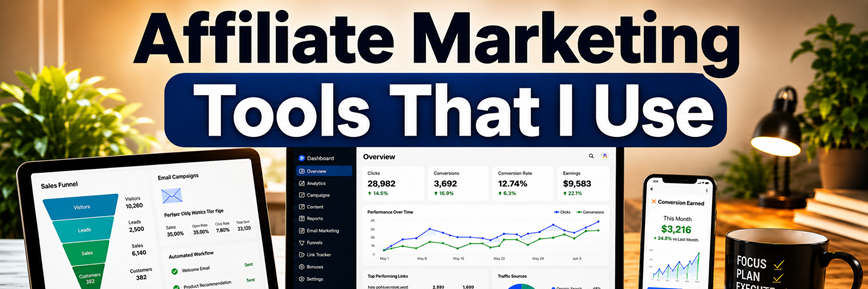
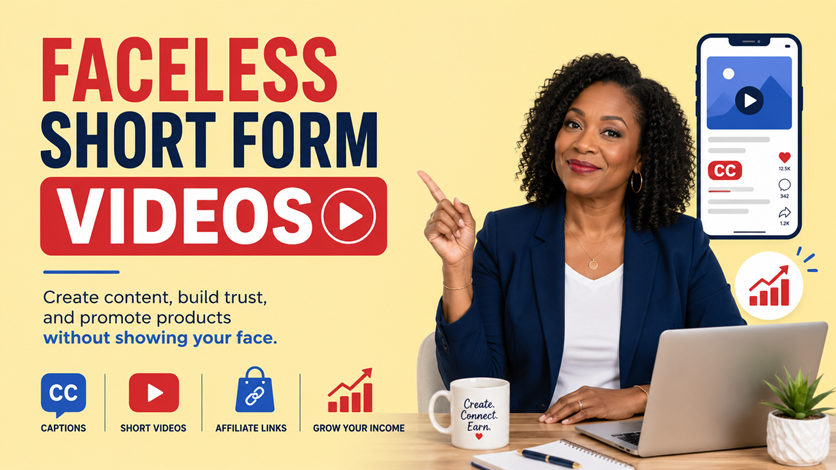
Faceless short form videos are one of the easiest ways to create content, promote affiliate products, and grow an online audience without showing your face.
Click Below to Watch Video
Platforms like TikTok, YouTube Shorts, Instagram Reels, Facebook Reels, and Pinterest Idea Pins are built for quick, visual content. People scroll fast, so your video has only a few seconds to grab attention.

The good news is that you do not need to be on camera to succeed.
You can create effective videos using product clips, screen recordings, text overlays, stock footage, hands-only demonstrations, simple animations, AI voiceovers, and captions.
This makes faceless video a great option for affiliate marketers, bloggers, introverts, seniors, and anyone who wants to create content without becoming the “face” of the brand.
Choose a Product That Looks Good on Video
The best affiliate products for faceless short form videos are easy to show in action.
A product should solve a clear problem, have visual appeal, and fit your niche.
For example:
In the weight loss niche, you might promote meal prep containers, a portable blender, resistance bands, or a digital food scale.
In the survival niche, you might show a fire starter, water filter, emergency radio, flashlight, or multi-tool.
In the home niche, you might feature storage solutions, kitchen gadgets, cleaning tools, or organization products.

In the online business niche, you might promote software, AI tools, templates, or content creation resources using screen recordings.
The more visual the result, the easier it is to turn the product into a short video.
Build Each Video Around One Simple Idea
Short form video works best when it is focused.
Do not try to explain everything in one clip. Choose one product, one problem, one tip, or one result.
A simple structure works well:
Problem
Solution
Result
For example:
If you are promoting a survival water filter, the video could show dirty water, the filter being used, and clean water being poured into a bottle.
If you are promoting a portable blender, the video could show ingredients going in, the smoothie blending, and the finished drink ready to go.
If you are promoting an AI writing tool, the video could show a blank page, the prompt being entered, and the finished draft appearing.
Keep the message simple enough to understand in under 30 to 60 seconds.
Start With a Strong Hook
The first few seconds matter most.
Your hook should quickly tell viewers why they should keep watching.
Good hook examples include:
“Stop wasting money on products you never use.”
“Here is a simple tool that solves this problem fast.”
“3 reasons this belongs in your emergency kit.”
“I tested this so you do not have to.”
“This tiny gadget saves me time every week.”
“Before you buy this, watch this.”
Use the hook as text on the screen. Many people watch videos without sound, so your opening text needs to do the work.
Use Clean Visuals and Close-Ups
Faceless videos depend heavily on what viewers see.
Use good lighting, a clean background, and close-up shots that clearly show the product.
You can film hands using the product, record your computer screen, use stock clips, or create simple AI-assisted visuals.
Show the product solving a problem. Show the before and after. Show how it works.
Avoid cluttered backgrounds and too many distractions. The product or idea should be the focus.
For physical products, close-ups are especially important. Show buttons, texture, size, packaging, portability, and any moving parts.
For digital products, use screen recordings to show the result. For example, show an AI tool creating an email draft, a design template being edited, or a dashboard saving time.
Add Text Overlays and Captions
Text overlays make your video easier to follow.
They also help viewers understand the message even if the sound is off.
Use short, clear phrases such as:
“Saves time”
“Easy to carry”
“Beginner friendly”
“Works in minutes”
“Great for small spaces”
“Simple setup”
“Link in bio”
Keep the font bold and readable. Do not overload the screen with too much text. One short phrase at a time usually works best.
Captions are also important because they make your video more accessible and easier to watch.
Use Voiceovers, AI Voices, or No Voice at All
You do not have to use your own voice.
Faceless videos can work with:
AI voiceovers
Text-to-speech
Music and captions only
Stock audio
Hired voiceover talent
Your own voice, if you are comfortable
AI tools can now help create natural-sounding voiceovers, generate scripts, and match the tone to your audience.
Keep voiceovers short, conversational, and helpful. Avoid sounding like a hard sales pitch.
The goal is to explain the benefit clearly while keeping the video moving.
Let AI Speed Up the Process
AI can help you create faceless short form videos much faster.
You can use AI to:
Brainstorm video ideas
Write short scripts
Create hooks
Generate captions
Summarize product benefits
Turn blog posts into video scripts
Create voiceovers
Suggest hashtags
Repurpose one video into several formats
A simple AI prompt could be:
“Create 10 faceless short form video ideas for promoting [product] to [audience]. Include a hook, visual concept, text overlays, and call to action for each idea.”
You can also ask AI to shorten a script to 30 seconds or rewrite it in a more friendly, beginner-focused tone.
AI helps with speed, but your judgment matters. Always make sure the claims are accurate and the product recommendation is honest.
Include a Clear Call to Action
Every video should tell the viewer what to do next.
Your call to action can be simple:
“Link in bio”
“See the full review”
“Get the checklist”
“Watch the full tutorial”
“Check today’s price”
“Read the blog post”
“Try the tool here”
Do not make the call to action complicated. One clear next step is enough.
For affiliate marketing, make sure you follow platform rules and disclose affiliate relationships when required.
Repurpose Across Platforms
One faceless video can be used in several places.
Post it on TikTok, YouTube Shorts, Instagram Reels, Facebook Reels, Pinterest, and even inside blog posts or emails.
You may need to adjust the caption, title, hashtags, or call to action for each platform, but the core video can often stay the same.
This saves time and gives your content more chances to work.
Avoid Common Mistakes
Faceless videos work best when they feel useful, not pushy.
Avoid these mistakes:
Trying to explain too much
Making the video feel like an ad
Using tiny unreadable text
Skipping the hook
Using low-quality visuals
Making exaggerated claims
Forgetting the call to action
Promoting products that do not fit your audience
Focus on helping first. The product should feel like part of the solution, not the entire message.
Turn Simple Faceless Videos Into Traffic and Sales
Faceless short form videos are fast, flexible, and beginner-friendly.
They let you promote affiliate products, teach useful tips, and build trust without showing your face or using your own voice.
Start with one product, one clear problem, and one simple video idea. Use AI to help with hooks, scripts, captions, and repurposing. Then publish consistently and track what works.
When done well, faceless videos can help you attract attention, drive traffic, build trust, and create steady affiliate income without ever stepping in front of the camera.